Wednesday, March 16th, 2016 .

We are happy to announce the opening of a new headquarters in Charleston, South Carolina.  Waitlist Me started in the Silicon Valley by former Google employees as NoshList, a popular restaurant app, and expanded to serve businesses across multiple industries.  As part of the company’s aggressive growth plans, Waitlist Me considered a wide range of options and was attracted to Charleston for a number of reasons.

“Charleston is a true hidden gem for tech start ups,” said Brian Hutchins, Waitlist Me CEO, “When you consider the beauty of the area and all the things the city has to offer, it is hard to beat the quality of life, and that is a key strategic advantage in attracting and retaining top talent.  Furthermore, smart investments made in infrastructure and programs to support business innovation are starting to pay dividends in Charleston, and the local tech economy is evolving rapidly. Waitlist Me has an office at the Charleston Digital Corridor, is part of the Harbor’s Propel accelerator program, and will be exhibiting at the DigSouth.  These are a few examples of very valuable initiatives that have come into their own relatively recently.”

To celebrate the occasion, the company will be giving away a free year of its Premium service to ten Charleston businesses that need it most, based on suggestions from locals.  The offer is designed to raise awareness around how technology can improve wait experiences in Charleston.  It also opens up ways for the broader community to engage and share ideas.  Many businesses are still struggling by using paper or clunky buzzer systems, and don’t realize there are better ways to manage their waits.  People that visit these places feel the pain though.  Nominating a business for the prizes is as simple as visiting www.waitlist.me/charleston and sharing a business name and experience that could be improved.

Charleston is well known for its hospitality, and Waitlist Me is tool local businesses can use to help offer the exceptional level service that makes it a top tourist destination as well as a great place to live.  Instead of just standing around bored or frustrated, waiting customers could take a nice stroll, experience more of the city, shop, and more.  It’s a win-win for everyone, and we are hoping people will help us spread the word.

Monday, October 5th, 2020 .

You’re a small business owner. You shouldn’t have to be a tech whiz. Forget all the training hassles. Forget the painful user manuals. There’s no reason for you to waste your time and money on waitlist management software that’s anything less than plug and play.

Here are seven easy ways to figure out if the tool you’re eyeing is more trouble than it’s worth.

You can’t buy it without talking to a sales person.

If a product is straightforward and user-friendly, it sells itself. You should be able to watch a quick video, then just jump in and start using the product. When a demo from a slick sales rep is required, it’s not the simple solution you’re looking for. Remember: You want to buy the product, not the pitch.

The pricing comes with more fine print than a cell phone contract.

Start-up fees, 24/7 support fees, usage surcharges, complicated pricing tiers, contracts that lock you in for a certain amount of time—these are sales tactics companies use to hook you with a low upfront price and milk you down the line.  Your bill should be simple to understand.  It should be predictable and not change from month to month.  And most importantly, there shouldn’t be any surprises.

Or, even worse, there is no pricing.

One reason a tech company would make you inquire to discover the price of its software is that it knows a salesperson is more likely to get your credit card number than the product itself.  Another reason is to figure out how much money you can afford or are willing to pay so they can extract more money from you.  Throwing out a high list price (that isn’t actually listed anywhere public for fear of scaring people away), and playing the discount game to make you feel like you are getting a bargain is a common sales tactic with complicated software.

There’s a training program, and you probably have to pay for it.

You don’t train someone to use a simple product, you just use it.  Look at great technology companies like Google, Amazon, and Uber as a few of many examples where simpler solutions are less expensive…  The more complex and detailed software is, the more time you need to spend learning it, training your employees on it, and retraining your employees on it when there’s an update. Plus, there’s an increased likelihood of mistakes and complaints. You should get help when you need it, not need to get help just to be able to use a service because it is complicated.

Installation requires you to do 37 other things

A good solution doesn’t require multiple trips to electronic stores. A simple solution doesn’t keep telling you to download more programs to make it work correctly. A good, simple solution is the one that fixes your problem now, without a tacked-on to-do list.

Your customers need to download it, too, in order for you to use it.

Software shouldn’t just be easy foryou to use; it should also be a no-brainer for your clientele. When you add another barrier to use, whether it’s downloading an app or creating a unique login, you’re making customer service harder on yourself.  Everyone has a phone that receives text messages and calls.  They shouldn’t need to install an app.  And most won’t go through the extra effort so you are limiting the number of people than can receive better service with a simpler solution.

Figuring out which button does what feels like decoding your car’s dashboard icons.

When business is busy, you can’t afford to waste time fumbling with your software’s interface to access a certain feature. The line stretches out the door, the customers’ toes start to tap, and the person you’re trying to serve thinks you look like a doofus. And that is not how you want your next Yelp review to read. You should be able to know what every single button does instantly, not after countless seconds of deliberation.  And you shouldn’t have to navigate through all sorts of options and secondary information when greeting a customer.  Eyes on the customer, not the iPad.

Listen: We get it ‘cause we’ve been there.

That’s why we took simple and traditional tools —paper waitlists, reservation books, and grease-board floor plans—and transformed them into one intuitive app that you can download now and use now. Find it in the App Store and Google Play Store, or sign up at www.waitlist.me.

Thursday, March 24th, 2016 .

Waitlist Me has a couple options for allowing customers to add themselves to the waitlist and reservations.  It also offers variety of ways to customize the process to the needs of different businesses.

A few months ago we released a web widget that businesses can easily add to their websites.  Many businesses told us how much they liked the new widget.  As part of the feedback we received, we found ways we could make implementing and using the new widget even simpler, and we added an option to use the widget on a hosted page.

The new widget page allows businesses to just link to their unique URL from a website, blog, email, or whatever.  The widget page is easier for less tech savvy businesses, and there is no need to involve a web developer to make sure it is added correctly to the website.

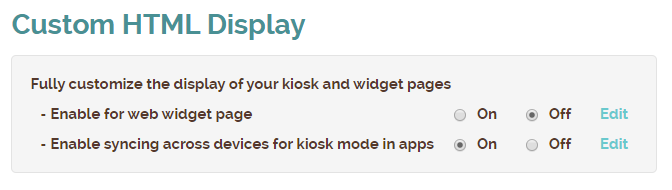
The widget page is also especially well-suited for businesses that allow people to add themselves to the list when they arrive at the business.  All you have to do is put the URL into the browser of any tablet and you have your own check-in station.  By setting the widget option to only show the “Add Yourself” screen, and not the estimated wait you might show on a website, it simplifies the page even further. You can also add custom instructions and images to the bottom of the page for more clarity.

iPad stand1 copy


When asking customers to enter themselves, the simpler you make the interface, the less chances there are for mistakes and frustration.  The hosted widget page makes it easy for your customers to add themselves, which makes it easier for you.

Monday, June 28th, 2021 .

Want to save time entering customer information when using Square and Waitlist Me together? Our new integration passes basic customer information between the two systems to make serving customers more efficient. For example, when you add a customer to the waitlist or a reservation in Waitlist Me, you can pull it up later in Square when it is time to pay. Or for scenarios where customers pay first or are already in Square, you can look up their information when adding them to Waitlist Me to manage their wait and send notifications when their order is ready. In these and other cases, businesses can save time by not having to add customer info twice.

To get started, in your Waitlist Me app go to the gear icon and select Square Integration. Select On for the Square Authentication option, and you’ll be prompted to enter your Square login information. 

An acceptance page will come up; choose Allow to let Waitlist Me read and modify your customer information. Once you’ve done that, you can then turn on one or both of the next two options. 

Square Customers Search, when enabled, would allow you to search your Square customers in the Waitlist Me app by phone number. Start typing their phone number to see a list of matching names and phone numbers as you type.

The last option lets you add customers to your Square customer database from the Waitlist Me app. Choose Yes to have them all automatically added, or Ask Me to be prompted whether to add customers. 

If you’re using multiple devices, your settings will sync across devices automatically. 

Thursday, October 29th, 2020 .

In today’s age of social distancing, some businesses are using QR functionality to increase ‘touchless’ options for customers. For example, it has become more common for restaurants to place QR codes on tables so that customers can use their cell phone to quickly access an online version of their menus.

Waitlist Me has a new feature for generating a QR code to make it easier for customers to join the waitlist while standing outside of a business. All of the Waitlist Me subscriptions include options for businesses to use the Add Yourself Web Widget to let customers join waitlists remotely, and usually customers would access these features from business websites. However, in cases where a customer has already arrived at the business and your staff is unable to greet them in person, adding a QR code to a flyer or sign posted near the front door with some simple instructions can be an easier way to get customers to the web widget and join the waitlist. Using a QR code to open up a link to the web widget in their phone browsers is easier than having them type in the web URL directly. 

The widget can be configured in the settings online by going to Account > Settings > Add Yourself. Once you’ve tailored the options to fit your workflows, generate your unique QR code by using the link at the top of the Add Yourself settings page.

From there, you can print or download your QR code and add it to whatever signage you have for customers. Using the QR code feature can provide a touchless option instead of a sign-in kiosk, or simply save your staff time from needing to enter each customer’s information into the waitlist app.