Monday, September 6th, 2021 .

Due to significant fee increases from US mobile operators for sending text messages, we will no longer be including unlimited notifications in the subscription prices of US plans. Instead, we will include a bundle of notifications each month and the ability to pay separately for messages sent above this monthly allotment. These changes will affect all new signups from September 6, 2021 and apply to existing customers from Oct 4, 2021.

Our goals continue to be to offer the best value in waitlisting and scheduling services, while providing the flexibility for different businesses to send as many notifications as they need. It is important to note that the increases in mobile carrier fees affect all services sending text messages, and we believe that even with our latest plan updates that Waitlist Me will continue to be the price and value leader in its category.

The Premium plan includes 1,000 notifications per month, Pro includes 2,500 and Platinum 5,000. For businesses with heavier messaging needs, additional text and call notifications can be sent at a rate of $0.02 per notification, deducted from a prepaid balance. 

Monthly notifications reset when monthly subscription payments are processed. For users on annual plans, they reset every 30 days starting from the original payment date. Payments for adding to the prepaid balance can be made from the Account area of the Waitlist Me website, and there are settings to make it easy to auto-refresh the balance when it gets low.

Most businesses currently using our services would not hit these notification limits, and thus would not be affected by this update. Waitlist Me has several settings and options for sending notifications, so businesses can control when they don’t need to be sent. There are ways to monitor the usage of both the notifications that are included in the plan each month as well as the ones that are charged separately. The number of monthly text and call notifications sent can be viewed in the Settings area of the apps or in the Account area of the website. The website also shows a record of messages sent and the associated costs in the Messaging Costs area of the Billing History. 
Thursday, April 30th, 2020 .

The week coronavirus hit the United States, grocery stores around the nation announced a similar plan: They were going to stagger shopping times to minimize the spread of COVID-19 to the sectors of the population thought to be most vulnerable, the elderly and the immune-compromised.

Most stores’ plans restricted an hour or two of morning grocery shopping time to these customers—and in doing so, introduced a new phrase to the lexicon: staggered waiting.

Wait. Isn’t all waiting staggered?

The short answer: nope.

The old-school, American-style queue amounts to a mosh pit of toe-tapping customers. During normal circumstances, that’s not a good thing. It’s frustrating for your guests and it often leads to lost business. During a pandemic, it’s even worse. You don’t want tons of people crowded together, huffing hot air all over each other!

Waitlists and reservation tools, like Waitlist Me, help businesses stagger waiting in a way that’s become quite familiar. For business owners, it helps even out the traffic flow, ensuring excellent customer service and zero employee overwhelm. For customers, it ensures a positive, efficient experience. Win-win!

Grocery stores are using the idea of staggered waiting a bit differently than most of us are used to, but it’s not actually a new idea. In fact, you’ve probably experienced it before.

How billion-dollar businesses use staggered waiting

Disneyland, the pinnacle of efficient queues, uses a staggered waiting system to provide an extra-special experience to its VIP guests, many of whom visit the parks through organizations like Make A Wish. It’s also offered as a premium, upgraded feature for ticketholders.

Another example of staggered waiting happens weekly at many Target stores across the country. The big box retailer has offered sensory-free shopping hours for customers who are sensitive to light, noise, and crowds for years. It’s been a huge success, especially for those on the autism spectrum.

Ways your business can use staggered waiting today

If you’re looking for new ways to control crowds or traffic patterns, staggered waiting is a concept you should explore. Not sure how that might look for your workplace? Creative ideas can come from different places, and you can look around at what others are doing.  Here are a few examples of how businesses can stagger demand to improve workflows and better cope with COVID-19.

Quick tip: Use Waitlist Me’s custom text notifications to share new waiting policies or instructions with your clients and customers.

– Veterinary office using morning hours for feline appointments and afternoon hours for canine appointments to keep small waiting areas calm.

– Restaurants offering special deals or menu items at different times of the day to encourage people to dine at off-peak hours.

– Tutoring center facilitating study material pick-up staggered by the first letter of students’ last names.

– Auto mechanic offering reverse delivery appointment windows to pick-up cars (and meet with customers) at home rather than at the shop.

– Local organic farmer providing fresh produce home delivery staggered by their customers’ area.

– Doctor’s office splitting patient appointments by background. Immune-compromised and elderly patients are diagnosed car-side, while other patients come inside the office.

– Family-owned pharmacy providing special hours for curbside delivery and in-store pick-up.

Thursday, March 19th, 2015 .

wiggleworks

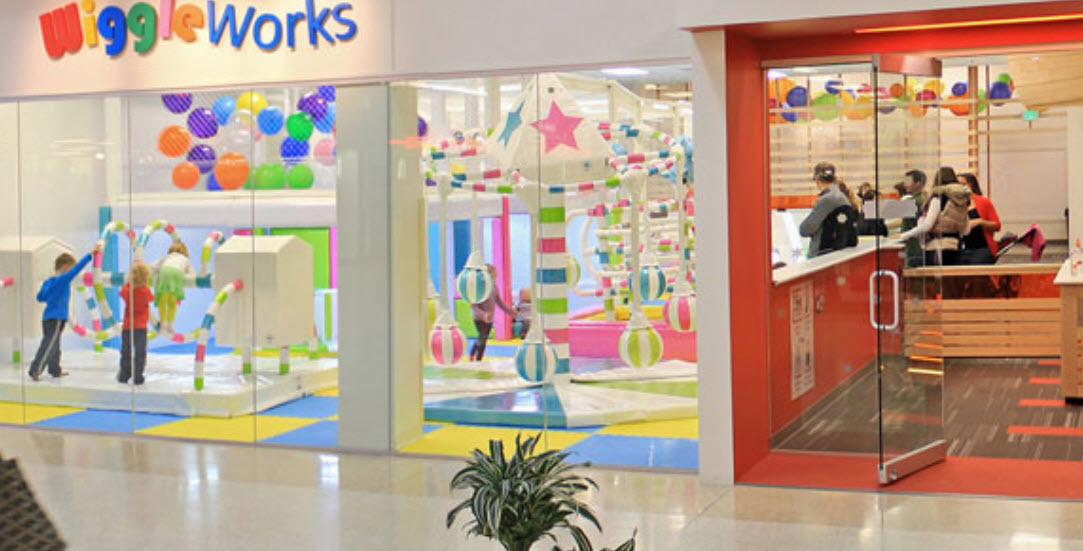
WiggleWorks kids is a popular destination for children and their families, being the only indoor playground that caters strictly to kids who are 48-inches tall or less. Weekends can be very busy, and Waitlist Me helps WiggleWorks kids reduce wait times, increase the number of kids they serve, and make parents happier.

WiggleWorks kids provides soft, moveable, interactive play equipment for children at its two Washington State locations, one each in the towns of Bellevue and Puyallop. The equipment is used to help children build motor skills and the unstructured play area gives them an opportunity for social interaction with children their own age.

“We limit the number of children who can play at one time and we are first come, first serve. There was no way for someone to get on the waiting list unless they called in or came into the store,” said Bellevue store manager, Kristen Deskin. “We had a lot of complaints about our wait list system because there were opportunities for a lot of user error and it often got confusing.”

That confusion was compounded by the fact that employees were responsible for taking down names and phone numbers, which were sometimes misprinted or missing key letters or numbers. Troubled by the many customer complaints, Deskin and her team looked for a better way to manage their waitlist. In 2013, they turned to WaitList Me.

“When we launched Waitlist Me we immediately felt more in control of our waitlist and felt like we had more opportunities to serve the public. This is because we could accommodate the number of people wanting to get on the list,” Deskin said. “It also has freed up an employee because they are no longer tied to taking names.”

Deskin likes how WaitList Me is easy to use and provides a simple way to keep track of store waitlists and whether customers walk in or add their name from home through the WiggleWorks kids website.  Since making the switch, customers have been happier and are more excited to come into the locations.

“We have had wait times of up to two hours in the past and WaitList Me has reduced those times so no one waits now for more than 45 minutes to an hour,” Deskin said. “I also use it to see and track how many children are coming back into play after waiting compared to how many names we are having to delete. That was one big improvement I was able to track that enabled me to make some good business decisions with the owner.”

– By Valerie Killifer, special to WaitList Me

Tuesday, March 19th, 2019 .

Need a good ol’ guffaw to get you through a 30-minute wait? How about a giggle while the host squares away your table? Whether you’re queueing for an age or hardly a second, you’ve gotta spend your time doing something.

Since a bout of laughter is scientifically proven to decrease stress—which waiting around can cause—we’re all for a rip-roaring, rib-crabbing roll in the aisles. Snorts, snickers, and smirks are welcome, too.

Ready to get your grin on? We’re dialing up the most GIF-tastic reaction shots to waiting for anything and everything.

When you walk through the door…

Cut to the hostess telling you there’s a wait…

Sigh. OK, ok, how long will that be?

Are you joking?

Are we there yet?

How ‘bout now?

Still a “no,” then. Awesome.

Lookit! That one’s open!

Surely, I’m not invisible.

Come onnnnnn….

When it’s finally your turn.

YES!

Thursday, August 27th, 2015 .

Taking advantage of new technologies can have a big impact on your bottom line. Here are a few pro tips:

Crush Your Rush

No one likes to wait, but when things get busy you can reduce walkaways by improving your customers’ wait experience. Waitlist Me is an app that helps you provide better wait estimates and send customers text notifications when their tables are ready. You can even display a dynamic view of the waitlist for customers to check on a digital sign or TV with solutions like Enplug and BrightSign.

Businessman with cloud computing concept


Leverage the Cloud

As the quality, price, and usability of hosted technology have improved dramatically in recent years, businesses are dumping old hardware for cloud-centric solutions. Clover is a new all-in-one POS system with an elegant design that replaces the cash register, payment terminal, receipt printer, and barcode scanner and has an app market for easily customizing features. Another example, Switch, is a cloud-based business phone system you can set up and customize in minutes, and
provides the type of features you’d want from a PBX at a fraction of the price.

Work Digitally Like a Pro

Just as email revolutionized regular mail for many of our communications, there are now more online documents, apps, and tools that can improve your business productivity. Google for Work is a powerful set of apps that let you communicate, create, share and collaborate, from any device with ease. Evernote is a popular consumer app that has recently added more team and admin features to help businesses manage digital workspaces. Finally, UberConference is a simple way to make unlimited conference for free from a computer or a phone.