Thursday, October 25th, 2018 .

If you listen to the internet’s many critics, millennials are self-obsessed complainers with a penchant for arrogance, an aversion to risk, and some serious Peter Pan Syndrome.

They also eat out five times a week, are looking to make big purchases, and prioritize investments in their mental health and physical fitness. Their spending power is estimated at $3.39 trillion. By 2020, they’ll be the ones paying for one-third of the world’s goods and services.

Millennials are increasingly becoming the customers you need to know inside and out. Who are they? How do they spend their money? What do they want?

Let’s take a closer look.

Who is the millennial customer?

Most people who consider themselves to be “young adults” fit into the millennial category. They were born between the early 1980s and the turn of the century (the generation’s end date waffles between the mid-nineties and the early 2000s, depending on who you ask). Today, millennials range in age from about 16 to 36. They are just now coming into their own as college graduates, young professionals, married homeowners, and parents.

Millennials make up the majority of the workforce in the United States. By 2025, 75 percent of the workforce world-wide will be made up of this one generation. The world is their oyster, and their wallets are open.

How do millennials spend their money?

Millennials pay more for brands and experiences—if the business in question offers them some sort of added benefit. That could mean more convenience, an alignment of their personal values, a better user experience, or greater perceived value.

They’re also incredibly loyal. Once they find a brand they love, whether it’s a store, a restaurant, a hotel, a gym, a salon, literally anything, they’ll stick with it. And, thanks to their penchant for social media, they’ll spread the word. With millennials on your side, referral business can become your new best friend.

What do millennials want?

This generation grew up as the internet was finding its legs. The oldest millennials were computer-savvy before Google was a thing, while the youngest can’t remember a world without YouTube. They’re gamers, emailers, texters, and content-consumers—and they expect the rest of the world to keep up with them.

What does that mean for you?

Eliminate the wait

For millennials, on-demand everything is the norm. A long waiting list is a major drawback. A long line? For those not enticed by hype or the cool-factor, long lines mean finding the next best thing: your nearest competitor.

Waitlist Me shortens lines and makes them invisible to new customers. The app lets you accurately estimate wait times and track your business’ resources, which can help you become more efficient over time. It also frees customers from your waiting area. This gives the illusion of shorter wait times, which makes more people want to stick around.

Be available on your customers’ terms

With the internet comes 24/7/365 availability. Does your small business need to be open all the time, every day of the year? Absolutely not! But to win over a millennial crowd, you need to create a digital presence that is open to customers around the clock.

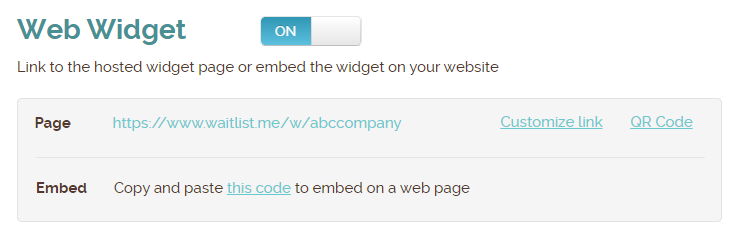
We make it easy to do just that. Waitlist Me offers an add-yourself widget, which you can easily include on your business’ website. The widget lets customers add themselves to your waitlist, reservations, or appointment schedule from wherever they are. You can also display black-out days, specials, and more.

Go mobile

Just because a millennial doesn’t leave home without a smartphone doesn’t mean they want to dial your number and speak to you one-on-one. This generation infinitely prefers texting over phone calls.

That’s why Waitlist Me built text message notifications directly into the platform. Forget about hollering out names in a crowded vestibule or passing out buzzing pagers. With a single gesture, you can send a message directly to the party next in line. Your guest will get the message on their phone instantly, wherever they are, just the way they like it.
Thursday, October 29th, 2020 .

In today’s age of social distancing, some businesses are using QR functionality to increase ‘touchless’ options for customers. For example, it has become more common for restaurants to place QR codes on tables so that customers can use their cell phone to quickly access an online version of their menus.

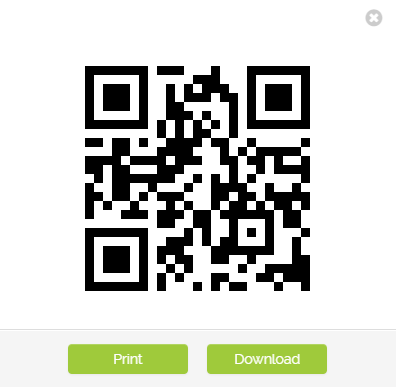
Waitlist Me has a new feature for generating a QR code to make it easier for customers to join the waitlist while standing outside of a business. All of the Waitlist Me subscriptions include options for businesses to use the Add Yourself Web Widget to let customers join waitlists remotely, and usually customers would access these features from business websites. However, in cases where a customer has already arrived at the business and your staff is unable to greet them in person, adding a QR code to a flyer or sign posted near the front door with some simple instructions can be an easier way to get customers to the web widget and join the waitlist. Using a QR code to open up a link to the web widget in their phone browsers is easier than having them type in the web URL directly. 

The widget can be configured in the settings online by going to Account > Settings > Add Yourself. Once you’ve tailored the options to fit your workflows, generate your unique QR code by using the link at the top of the Add Yourself settings page.

From there, you can print or download your QR code and add it to whatever signage you have for customers. Using the QR code feature can provide a touchless option instead of a sign-in kiosk, or simply save your staff time from needing to enter each customer’s information into the waitlist app.

Friday, July 17th, 2020 .

Our table management and resource management tools help businesses track availability and the time customers spend at their business.  When assigning customers to a table or resource or moving customers between resources we have had a pop up for choosing from a list of assignments in some of our views.  In some cases this is a quick and effective method, but other times it may be easier to select a table from the floorplan view or a resource from the grid view, so we have added a new tap to add option that switches to these views for selection.  We have also optimized the action bar in the process to make it easier to view information on customers waiting for or occupying a resource and perform key actions like clearing, serving, and moving.

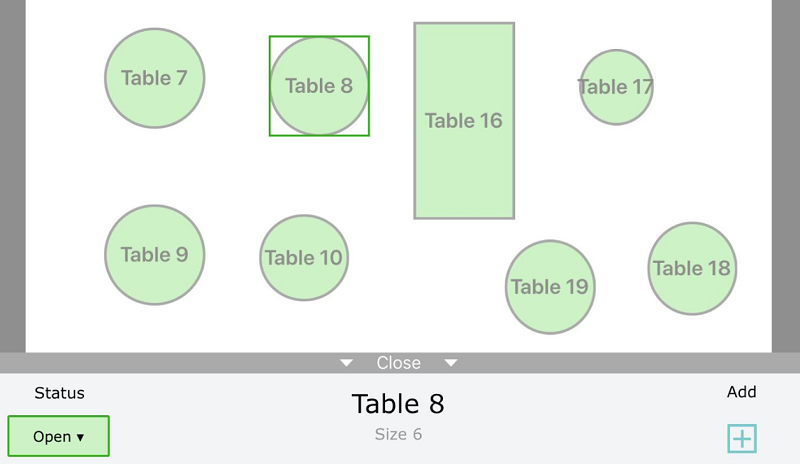
When you select an open table the action bar at the bottom will show the name & size, and the Add button will allow you to choose a party from the waitlist to assign to this resource. 

After a party is assigned to a table, tapping on that table will allow you to mark that customer as served (checking them off the waitlist), and show the table as occupied. 

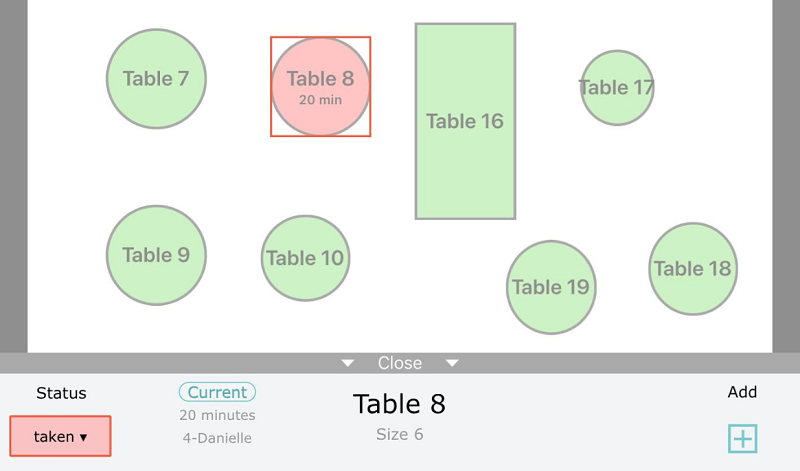
Once a party is seated, tapping on their table will bring up an action bar to display the party’s name, size, and how long they have been there. Pressing the Current button will give options to move the party to another table, or clear that resource to mark it as available. You can also clear a party from a table by pressing their current ‘Taken’ status on the left of the action bar and selecting ‘Open.’

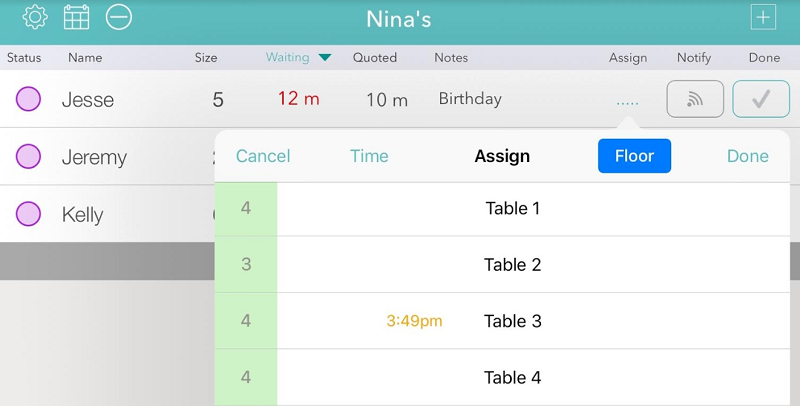
On the waitlist screen there are new options for assigning a party to a table. If you press in the Assign column for a party, you’ll see a list of tables that you can assign the party to. There will also be a new button at the top right of this menu, for Grid or Floor (depending on what view you’re using). Pressing that button would take you to the grid or floor view, where you could then tap on a table to assign the party. 

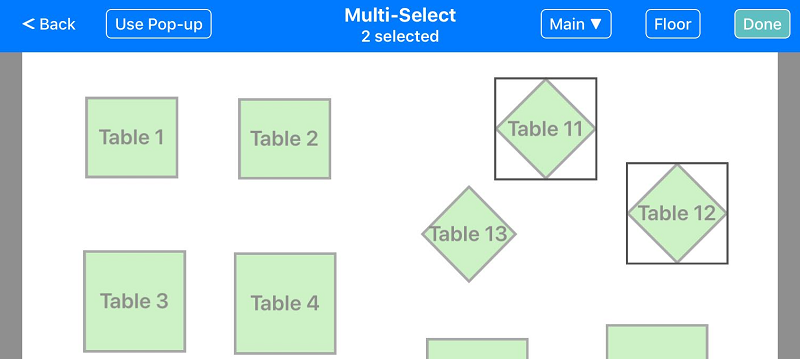
Once you choose Grid or Floor, the app will remember your selection and default you to that for future selections. The Floor/Grid button on the upper right will switch between those two views. If you prefer the list of tables, just choose Use Pop-up on the upper left. For the floorplan view, if you have more than one room you will also see your menu on the upper right to switch between rooms. 

When assigning a party to multiple tables, just press and hold the first one and then you will be able to select more. Press Done on the upper right to finish assigning multiple tables.

Tuesday, August 21st, 2018 .

Still using a paper waitlist or reservation book? Clinging to outdated paper-based solutions can be a drag on a restaurant. Here are six reasons to switch to a digital waitlist and reservation app like Waitlist Me. Read more at Restaurant & Cafe

Wednesday, October 30th, 2019 .

The demise of fast fashion darling Forever 21 might have you reaching for a Xanax, but should it? Not necessarily. After all, while one empire has fallen, some fast fashion brands are thriving.

Look at Target! Their private label pivot in 2018 has been hugely successful. Look at Old Navy! The Gap, Inc. brainchild plans to open 800 stores in the next decade. Look at Gymboree! The beloved clothing brand for babies and toddlers is making a comeback as a pop-up shop concept within The Children’s Place retail outlets.

See? There’s no need to panic. From new merchandising tactics to rebooted branding and marketing initiatives, there are all sorts of ways to keep a fast fashion business profitable. One of our favorite ways to keep your retail venture in the green is to improve your customer experience.

Not sure how to wow your customers? Keep reading for our favorite strategies.

Make customers feel welcome

One prominent reason many consumers turn to online shopping: pushy sales tactics that make them feel uncomfortable. While you should always greet walk-ins with a smile and a cheery “hello,” it’s time to reconsider retail standards that feel like the opening of a sales pitch. Instead of, “Can I help you with anything in particular?” try deploying friendly small talk. A comment about the rainy weather or a compliment on the cute sweater they’re wearing will make the customer’s experience feel more conversational than transactional.

And speaking of conversation, there’s no reason for your employees to avoid it. We’ve all been the only customer in an otherwise-empty shop, shrinking under the microscopic gaze of associates. Awkward! While private conversations should be kept off the sales floor, bantering about TV shows, sports teams, and other harmless topics can make customers feel at ease in your store. Remind them, though, that their body language is important: They need to look approachable 24/7 and they should always be paying attention to customers, ready to offer help on finding a size or snagging a dressing room.

Eliminate long lines

Online fast fashion retailers like Amazon and ASOS struggle with shopping cart abandonment. Brick-and-mortar retailers should be concerned about a similar situation: long waits for fitting rooms and cash registers. 

Lines have the tendency to intimidate rather than to encourage. Many shoppers will load up their arms with potential purchases, then turn to the line for the changing room and wonder if all these goodies are worth the interminable wait. One solution is to use a waitlist and appointment management app like Waitlist Me, which makes long lines disappear by taking them digital. Retail staffers can hold on to the merchandise customers are interested in and let them continue browsing while they wait. A quick text lets shoppers know when they reach the front of the line.

Improve staff productivity

Top-notch customer service starts with staffing. If your sales associates are overrun by to-dos or traffic, they’ll be too frazzled to show the level of service that results in sales and customer retention. Adding an app like Waitlist Me to your toolbox can help retail store managers make smarter real-time decisions based on how busy the store is.

Waitlist Me allows managers to easily view things like how many customers are waiting for help or a fitting room, and how long fitting rooms have been occupied. Keeping tabs on traffic patterns means that they know where bottlenecks are emerging so they can direct employees accordingly before customer experiences start to suffer.